The Anguish Era: the obituaries arrive — and they're 10% wrong
A founder eliminates the function on a podcast. LinkedIn writes the eulogies. Layoffs do the arithmetic. The decline of PM is real — but read the fine print: it's the decline of a very specific kind of PM.
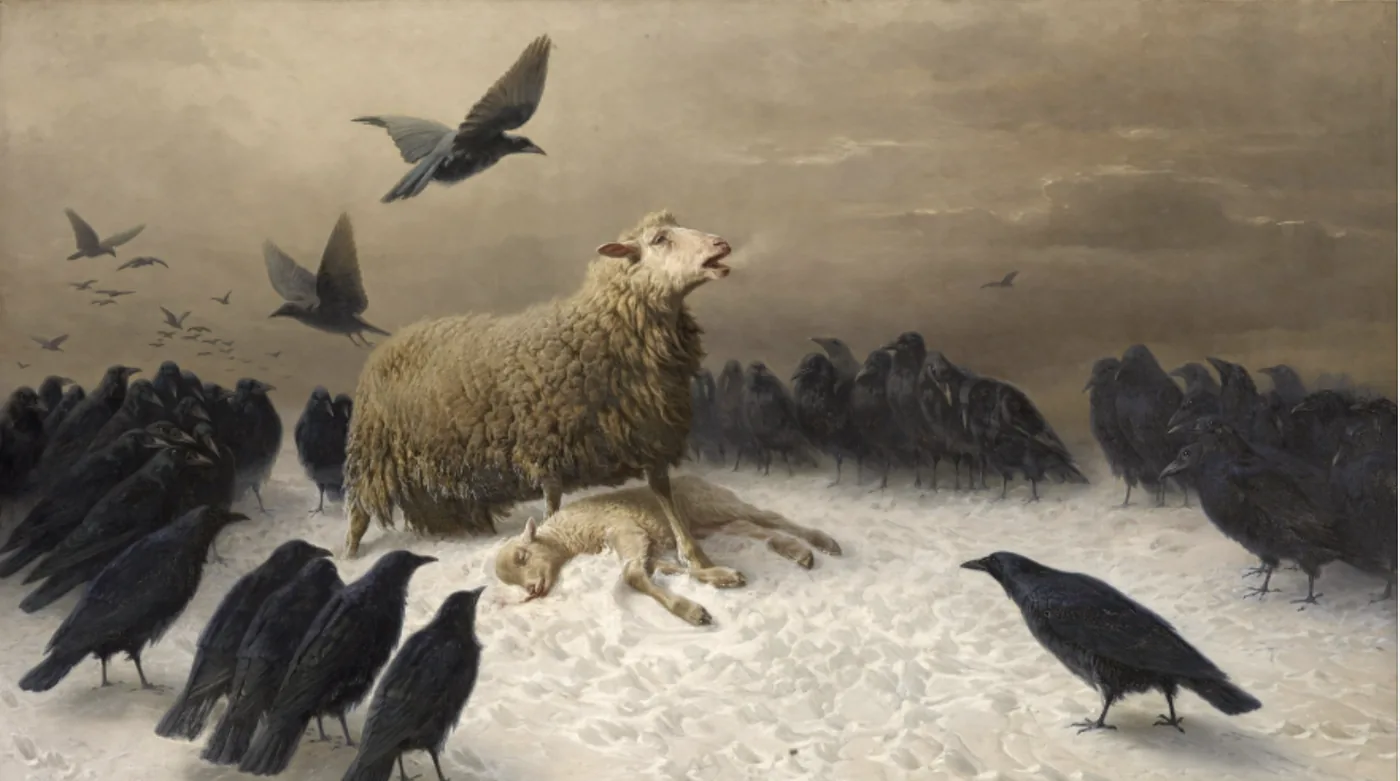
on the card: schenck's "anguish" — a ewe standing over her lamb in the snow, ringed by crows. the crows didn't kill anything. they just know when something has stopped moving.
The Chesky moment
The death-of-PM discourse found its lightning rod when Airbnb's Brian Chesky announced he was eliminating the traditional product manager function. The LinkedIn obituaries wrote themselves: PMs replaced by product engineers, by founders, by AI. As Stanford's product faculty later pointed out, most of the eulogies missed what Chesky actually said — not that product management was obsolete, but that the way companies had been executing it was. Airbnb dissolved the silo, not the work; the work moved to people who could own it end to end. Product coach Büşra Coşkuner made the dry observation that Airbnb was actively hiring product people even as the internet mourned them.

Brian Chesky — co-founder & CEO, Airbnbdissolved the silo, not the work — and the internet heard the opposite · photo: cc by 2.0, via wikimedia commons
But nuance doesn't trend, and the mourning had real fuel behind it. The post-2022 layoff cycles hit PMs hard and first — they're expensive, and, as one practitioner wrote in a widely shared essay on the role's decay, leaders often couldn't articulate what their PMs actually did. That's not a perception problem you can blame on leadership. It's the bill arriving for the Confusion Era: if your job spent five years disguised as ceremonies, don't be surprised when someone automates the ceremonies and concludes they automated you.
The verdict, in one sentence
The sharpest version of the indictment came from an Indian founder, quoted in The Ken's newsletter on the death of the craft: "90% of the Product Management jobs are redundant" — work that engineering, analytics, ops, or design could absorb between them, without the extra chair at the table.
Hold that number up against the AI squeeze and the anguish makes complete sense. Stanford lecturer Anand Subramani's framing: "AI is like having infinite interns." It does the first 80% of the work — the summaries, the tickets, the analyses, the status reports — instantly and for free. Now ask: what was the 90% of redundant PM jobs made of? Almost entirely that first 80%. The decline of PM isn't a mystery. Software finally ate the part of the job that was always, secretly, software-shaped.
Stack those two figures and they almost perfectly overlap. The 90% that a founder called redundant and the first 80% that software now does for free are, give or take, the same work. That is why the layoffs felt like a judgment and not just a cycle: the part of the role that got automated was exactly the part that had been quietly substituting for the real one. What's left is small, hard to fake, and impossible to delegate to an intern — infinite or otherwise.
The crows aren't circling product management. They're circling the part of it that stopped moving years ago.
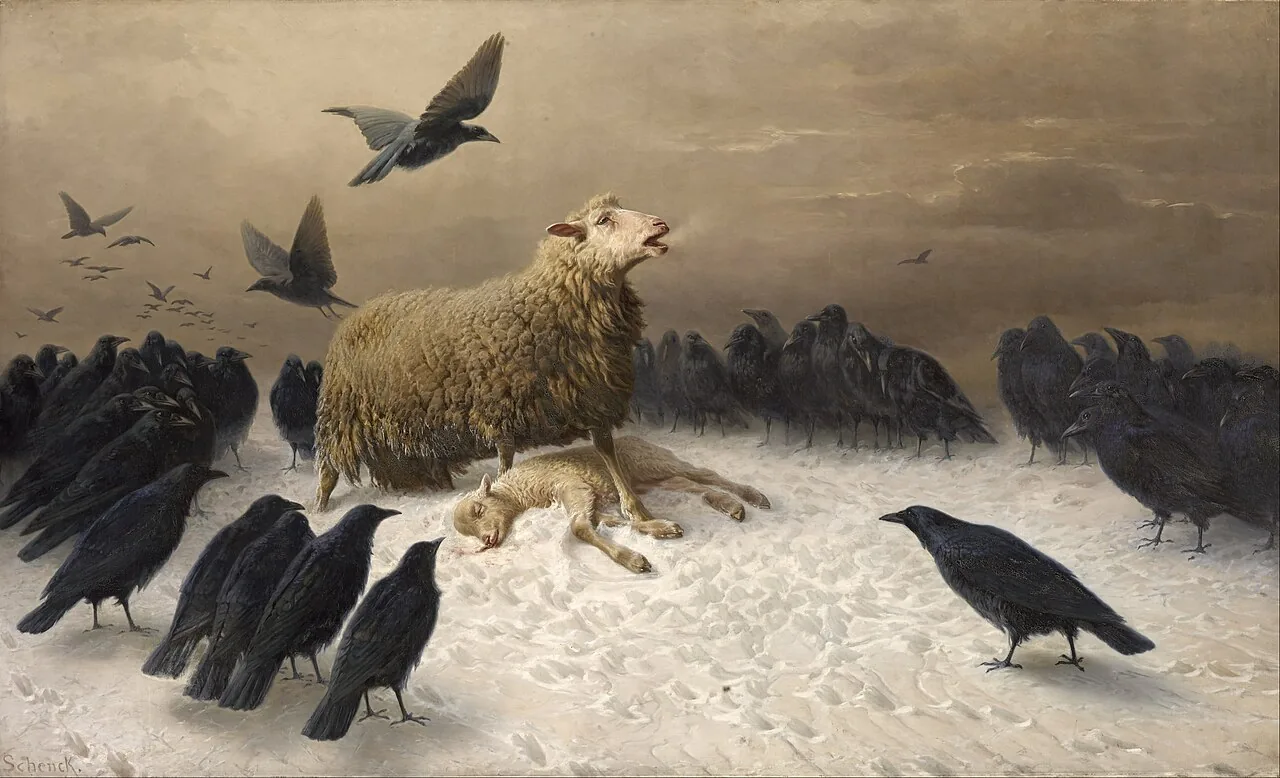
august friedrich schenck — “anguish”, c. 1878, national gallery of victoria · public domain · via wikimedia commons

What the obituaries get 10% wrong
Here's the honest counterweight, and it comes from the same sources writing the eulogies. The defenders of the role — like Mirza Beširović, answering the "product engineers will replace PMs" chatter — point out that we hold this funeral cyclically, and that dumping the PM's actual responsibilities onto engineers mostly produces burnt-out engineers. The Stanford panel lands in the same place: the function isn't dying, it's being forced back up the stack — away from coordination and toward strategy, customer insight, and judgment. The skill that survives every cycle, in Subramani's words, is knowing what people want.
Notice what that surviving job description is. Own the decisions. Know the customer. Carry the outcome. It's the 1940s HP role — the one from Chapter I — walking out of the wreckage of the rush more or less untouched. The eras don't end product management. They end the impersonations of it.
So the anguish is real, but it's selective. The ewe in Schenck's painting is grief. The 10% are still standing in the snow, and the field has never been emptier around them.
Which brings us to why you're reading this on a hiring page. We think the era after anguish belongs to the people who were always doing the real job — owners, mini-CEOs, the blue dots. We're hiring exactly one.
sources & further reading
stanford online — is product management dead? · the chesky moment, the infinite-interns framingpraveen gopal krishnan, the ken — who killed the art of product management in india? · the 90% verdict
shepherd's hook — product management is decaying · layoffs and the legibility problem
mirza beširović — the sudden demise of product management · the case for the defense